
Anti-Bullying
"Sir, I used to do this earlier."
"That's not okay."
By: Guiding Dreams Team
2025
5 min read
When Students Chose to Stand Up
Bullying is rarely a simple story.
It is not always loud. It is not always physical. It is not always visible.
Sometimes it is exclusion. Sometimes it is laughter. Sometimes it is silence.
And often, it is shaped by the group.
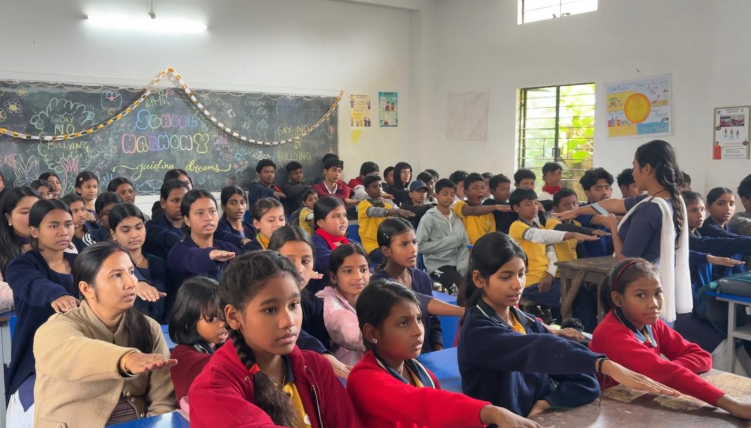
When we began integrating KiVa-inspired thinking into School Harmony at Natun Fatasil Town High School, we did not start by identifying "bullies." We started by building understanding.
- What is bullying?
- How does it feel to be on the receiving end?
- What role do bystanders play?
- How does group laughter amplify harm?
We explored scenarios together. Students reflected quietly.
Then something unexpected happened.
A few students raised their hands.
The Moment of Awareness
They said:
"Sir, I used to do this earlier."
"I didn't think it was bullying."
"Now I understand."
"I won't do it again."
"And I will not let others do it."
That moment was not about shame. It was about awareness.
When children truly understand impact, they recalibrate. Not because they are afraid. But because they see.
Shifting the Lens: From Individual Blame to Collective Responsibility
Traditional discipline asks: Who did it?
But KiVa-inspired practice asks:
- What does the group reinforce?
- What does silence communicate?
- Who can interrupt harm early?
We began reframing power.
Courage is not dominance. Courage is standing beside someone.
Students began practising simple phrases:
"That's not okay."
"Let's include him."
"We don't speak like that."
Small sentences. Big shifts.
When bystanders become upstanders, culture reorganises.
What We Learned
Children are not fixed identities. They are evolving.
When given:
- Clear definitions
- Safe reflection space
- Non-judgmental facilitation
- Structured repair opportunities
They grow.
The students who admitted past behaviour were not labelled. They became allies.
And that is the real transformation.
Anti-bullying is not about catching. It is about awakening.
Why This Matters for Schools
Bullying prevention cannot be a one-time workshop. It must integrate into:
- Classroom routines
- Student leadership
- Assembly messaging
- Teacher response pathways
- Parent awareness
That is why KiVa-inspired principles were embedded into School Harmony — not treated as a standalone campaign.
Belonging must be designed. And belonging reduces harm.
If You Are a School Leader
If you want to move beyond reactive discipline and build a preventive culture rooted in shared responsibility, we can support you with:
- Age-appropriate shared language modules
- Structured bystander activation
- Teacher facilitation tools
- Integrated anti-bullying design
Because when students choose to stand up — not stand aside — a school becomes safer from within.
Related Stories
Tags
Field Journal
Classroom Harmony
Assam
Zero to One
Mindfulness
Related Stories
Zero to One — A Journey Begins at Natun Fatasil Town High School
Today marked "Day 0" — a formal beginning to a journey that we hope will inspire resilience, connection, and a sense of belonging.
Classroom Harmony: Designing Structure That Reduces Stress
Emotional safety must be built into the daily rhythm — not added as an extra activity. Learn how we redesigned classroom structure at Natun Fatasil Town High School.
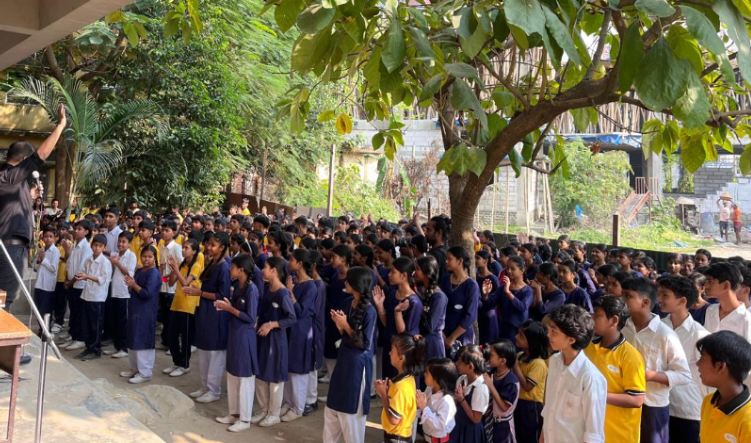
School Harmony: The Day a School Chose to Stand Together
After implementing Classroom Harmony, we asked: What would it mean to design harmony at the whole-school level? The answer unfolded on Children's Day.
When Students Chose to Stand Up
When we began integrating KiVa-inspired thinking into School Harmony, something unexpected happened. Students who admitted past behaviour became allies.
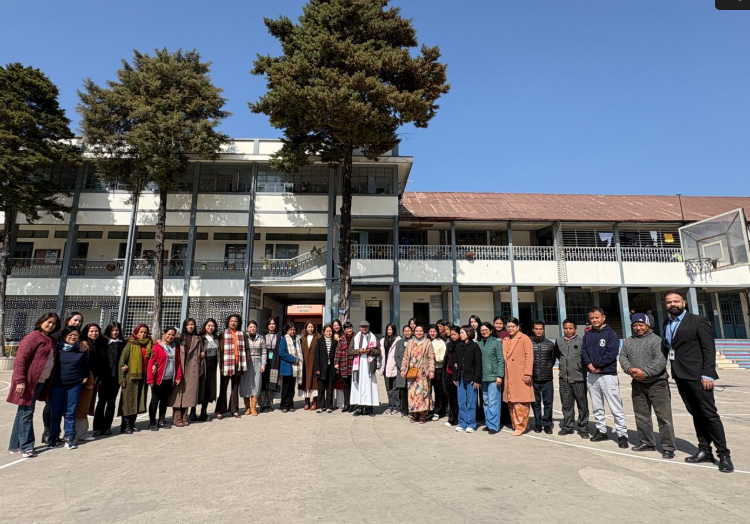
Shillong: When Teachers Became Practitioners
Our first cross-state step. St. Anthony's LP School in Meghalaya showed us what happens when preparation meets practice.
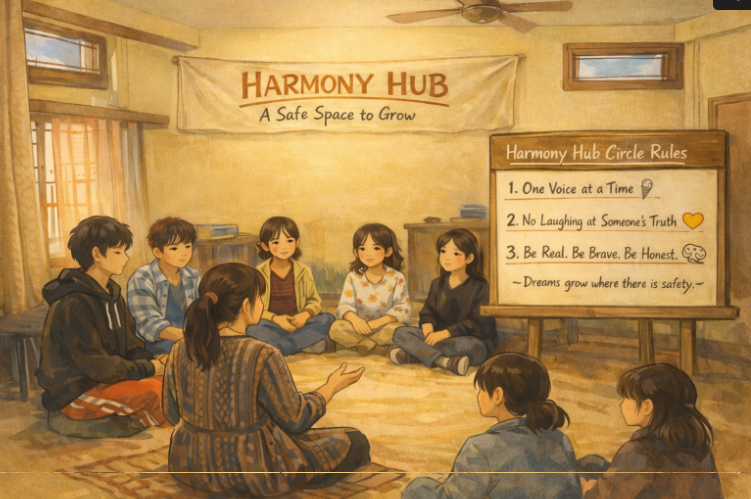
Harmony Hub: What Happens After the School Bell Rings?
School culture does not end at dismissal. Harmony Hub is structured continuity — a bridge between school and home.